I--- Tiny7 Iso -
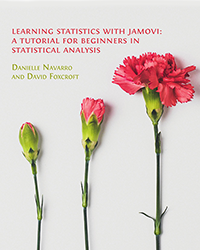
Danielle J. Navarro and David R. Foxcroft, Learning Statistics with jamovi: A Tutorial for Beginners in Statistical Analysis. Cambridge, UK: Open Book Publishers, 2025, https://doi.org/10.11647/OBP.0333
Read for freeDanielle J. Navarro and David R. Foxcroft, Learning Statistics with jamovi: A Tutorial for Beginners in Statistical Analysis. Cambridge, UK: Open Book Publishers, 2025, https://doi.org/10.11647/OBP.0333
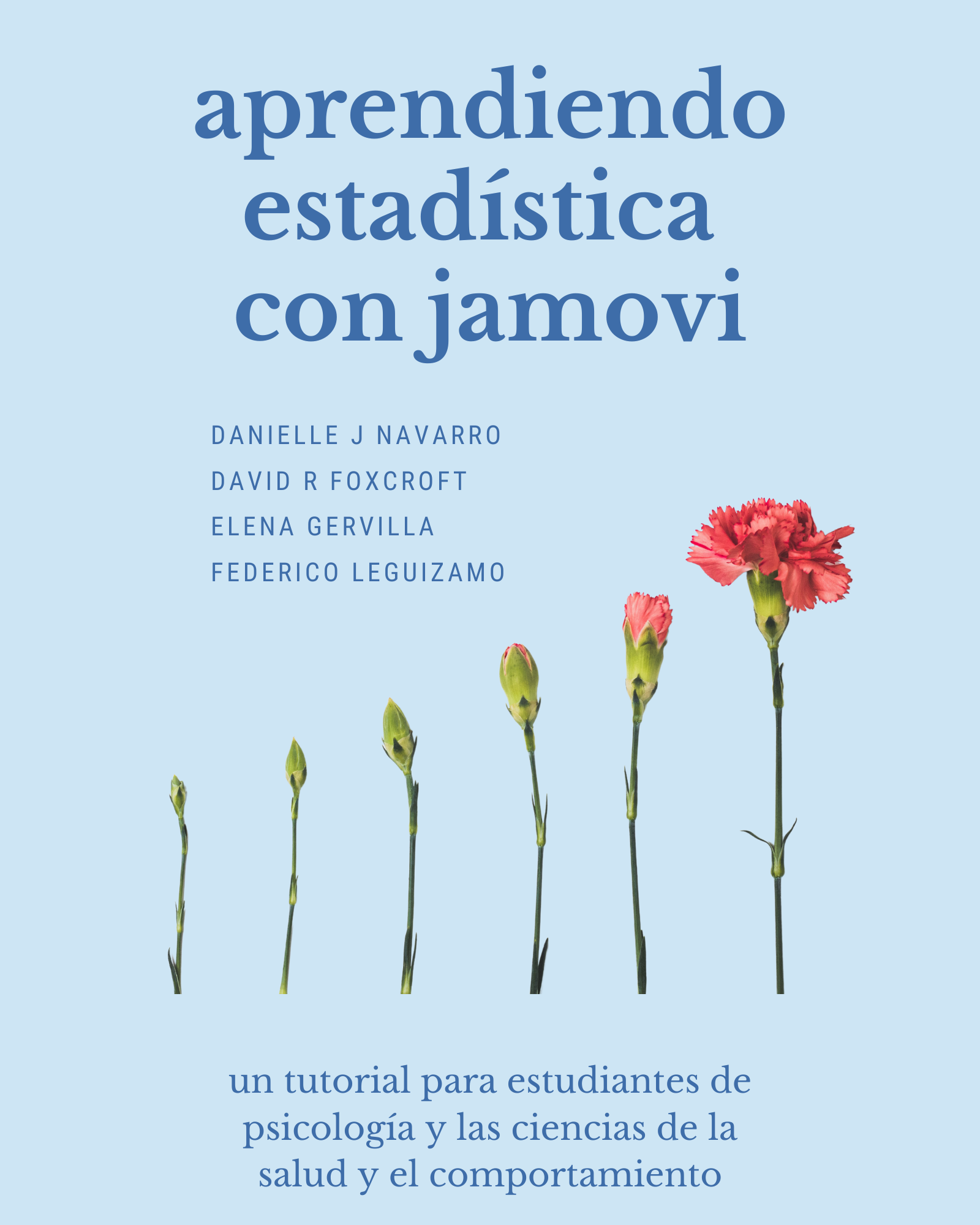
Read for freeLearning statistics with jamovi covers the contents of an introductory statistics class, as typically taught to undergraduate psychology students.
The book discusses how to get started in jamovi as well as giving an introduction to data manipulation.
Written in latex and published as a pdf file, for great design and easy access.
Descriptive statistics and graphing are followed by chapters on probability theory, sampling and estimation, and null hypothesis testing.
The book covers the analysis of contingency tables, correlation, t-tests, regression, ANOVA and factor analysis.
The book is open source licensed and is free to access and/or download.
The represents a bygone era of hacking and squeezing every byte out of weak hardware. It’s a technical marvel that let an Atom N270 run Aero Glass. But in 2026, the security gaps are too wide to ignore.
This process allows you to achieve the same performance goals as Tiny7 but with complete control and transparency. Tools like and RT 7 Lite are designed specifically for this purpose. They allow you to:
: Windows Explorer was trimmed down to its bare essentials, utilizing a custom "eXPerience" visual theme to optimize graphic resource allocation. Performance Overview: Tiny7 vs. Standard Windows 7 Standard Windows 7 (32-bit) Tiny7 ISO (by eXPerience) Minimum RAM Required 1 GB (1024 MB) 128 MB to 256 MB Idle RAM Usage ~500 MB – 600 MB ~88 MB – 145 MB Storage Space (Installed) ~2.4 GB Active Processes at Boot 22 to 24 Installation Speed 30 to 45 minutes 10 to 15 minutes Practical Use Cases: Why People Use Tiny7
: Kept as a fallback, configured with Google as the default homepage. 3. Desktop Additions & Tweaks i--- Tiny7 Iso
Because Tiny7 is a third-party modification that has reached "end-of-life," it lacks modern security updates and might contain pre-configured settings that are not secure for modern web browsing.
Because Tiny7 ISOs are strictly distributed via community mirrors and platforms like the Internet Archive , downloading them carries inherent risks of pre-packaged malware or spyware injected by unknown third parties. Best Use Cases Today
Older hardware from the mid-2000s cannot handle Windows 10 or 11. Tiny7 enables these machines to be useful for basic browsing or typing. The represents a bygone era of hacking and
(depending on your motherboard) to select the USB as the boot device. : The installation is unattended
To get the size down, "Tiny" versions often remove the Windows Firewall, Windows Update, and various system drivers.
The guide for "i--- Tiny7 Iso" , a famous stripped-down, unofficial modification of Windows 7 Ultimate SP1 created by the developer eXPerience This process allows you to achieve the same
. It’s designed specifically for legacy hardware or low-resource virtual machines where a standard Windows installation would be too heavy. Why Users Choose Tiny7 Tiny Footprint : The ISO file is roughly , compared to the 3–4 GB of a standard Windows 7 image. Low RAM Usage : It can idle at as little as 150 MB to 330 MB of RAM . Some users have even reported it running on as little as Fast Installation
: Check for driver compatibility and use the included TCP/IP patcher if you need to adjust deep system configurations. Are you planning to run on physical hardware or a Virtual Machine like VirtualBox?
Since Microsoft does not host these modified images, they are primarily found on community archiving sites:
: To ensure usability immediately after boot, the ISO contains built-in lightweight apps like Foxit Reader (for PDFs) and WinRAR (for file extraction).